Visualizing Early Sensory Development in Child
Communicating the nuances of infant growth requires more than just text; it demands visual clarity that respects both the science and the emotion of the subject. When designing for education, healthcare, or parenting resources, the challenge lies in translating complex biological processes into accessible graphics. A vector infographic template focused on early sensory development in child serves as a foundational tool for this translation. It bridges the gap between clinical data and human understanding, allowing creators to present information that is both scientifically accurate and visually engaging.
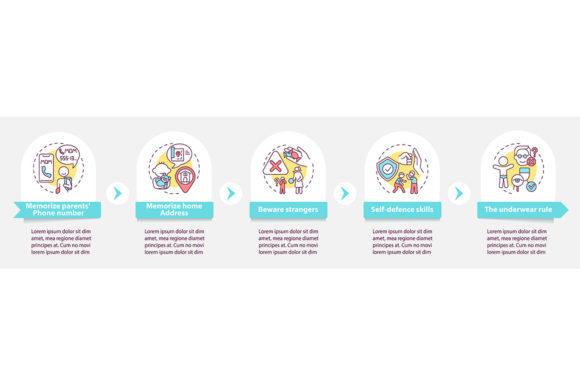
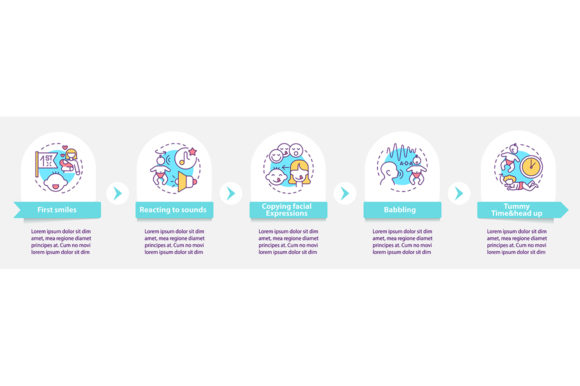
This specific design asset is not merely a collection of icons but a structured narrative device. By utilizing a five-step process timeline chart with linear icons, designers can map out developmental milestones without overwhelming the viewer. The clean workflow layout ensures that the focus remains on the content rather than decorative excess. For professionals tasked with creating childcare presentations or educational handouts, having a pre-structured vector file containing EPS, JPG, PNG, SVG, and AI formats streamlines production while maintaining high standards of visual communication.
The Strategic Value of Structured Visuals
Early sensory development in child encompasses vision, hearing, touch, taste, smell, and proprioception. These systems do not develop in isolation; they integrate rapidly during the first few years of life. Explaining this integration verbally can be abstract and difficult for non-specialists to grasp. A well-designed infographic anchors these concepts. The five-step data visualization format provides a logical progression, mirroring the sequential nature of neural development itself.
For educators and trainers, this structure offers a ready-made curriculum outline. Instead of spending hours aligning shapes and guessing at iconography, you can focus on populating the template with verified, age-appropriate data. The linear icon style is particularly effective here because it reduces cognitive load. In contexts where parents might be stressed or fatigued, simple line art communicates faster and more gently than heavy, realistic illustrations. This aesthetic choice supports the goal of making complex developmental psychology feel manageable and understandable.
Creative Applications Across Industries
The versatility of a vector-based template extends far beyond a single use case. Different audiences require different interpretations of the same core data. Here is how various professionals can adapt this asset to meet specific goals:
- Pediatric Clinics and Therapists: Use the timeline chart in waiting areas or consultation rooms to explain what parents should expect at each stage. The SVG format allows for scaling on large monitors or printing on high-quality brochures without pixelation. Color-coding each of the five steps can help differentiate between sensory domains, such as using soft blue for auditory milestones and warm yellow for tactile exploration.
- Childcare Centers and Preschools: Incorporate the workflow layout into staff training manuals or parent orientation decks. Consistency in visual branding builds trust. By using the same icon set across newsletters, classroom signage, and digital updates, centers create a cohesive environment that reinforces their expertise in early childhood development.
- Parenting Bloggers and Content Creators: Social media feeds often struggle to convey depth. Breaking the five-step process into a carousel post allows for detailed captions accompanying each slide. The included PNG files are optimized for quick web use, while the AI source file lets you adjust colors to match your personal brand palette instantly.
- Academic Researchers and Students: Presenting research findings requires precision. The EPS format integrates seamlessly with professional publishing software. Researchers can modify the linear icons to represent specific study variables, ensuring that the visual representation matches the methodology exactly rather than relying on generic stock imagery.
Customization and Technical Flexibility
Owning the source files is critical for long-term utility. While the JPG and PNG versions provide immediate solutions for quick mockups or low-resolution needs, the true value lies in the editable vectors. Adobe Illustrator (AI) and Encapsulated PostScript (EPS) files allow for non-destructive editing. You can thicken stroke weights for better visibility on mobile screens or simplify nodes for embroidery and vinyl cutting applications.
Consider the importance of accessibility in your adaptations. Early sensory development in child is a topic that affects diverse families, including those with neurodivergent members. High-contrast color adjustments made directly in the vector file can make the infographic readable for individuals with visual impairments. Furthermore, the ability to swap out icons means you can ensure cultural relevance and inclusivity, representing diverse family structures and caregiving environments accurately.
Maintaining Clarity in Data Visualization
A common pitfall in educational design is overcrowding. When working with a five-step timeline, discipline is essential. Each step should represent a distinct phase or concept. If you find yourself adding sub-bullets or tiny text within the linear icons, the design is becoming too dense. Use the infographic as a summary tool, linking to deeper articles or handouts for granular details.
Consistency in visual weight matters as much as content accuracy. Ensure that all five icons share the same stroke width, corner radius, and scale. This uniformity signals professionalism and helps the brain process the information as a unified system. When adapting the template, resist the urge to mix styles. Combining 3D renders with flat line art creates visual friction that distracts from the message about early sensory development in child.
Ethical and Accurate Representation
Designers working in this space carry a responsibility to avoid fear-mongering or over-promising. Visuals should reflect typical developmental ranges rather than rigid deadlines. When labeling the five steps in your timeline, use language like "Emerging Skills" or "Typical Progression" rather than absolute terms. The template’s neutral, linear aesthetic naturally supports this balanced approach, avoiding the overly cutesy or alarmist tones that sometimes plague parenting content.
Always verify the developmental milestones you insert against current pediatric guidelines. The template provides the container, but your expertise provides the value. Collaborating with occupational therapists or child psychologists during the customization phase ensures that the final output is not only beautiful but also clinically sound. This adherence to E-E-A-T principles (Experience, Expertise, Authoritativeness, and Trustworthiness) is what separates helpful content from generic filler.
Practical Workflow for Implementation
To get the most out of this ZIP file package, establish a systematic workflow. Begin by auditing your existing content library to identify gaps where visual aids could improve comprehension. Open the AI file and create a master document with your organization’s color swatches and typography defined. Save this as a new template so future projects maintain brand consistency automatically.
When exporting for different platforms, create a naming convention that includes dimensions and use-case tags. This prevents confusion between a web-optimized PNG and a print-ready EPS. For digital presentations, consider animating the five steps sequentially. Revealing one stage at a time keeps the audience focused on the current point of discussion regarding early sensory development in child, rather than reading ahead. This simple animation technique transforms a static image into an active teaching aid.
Ultimately, this vector infographic template is a catalyst for better communication. It removes the technical barriers to entry for high-quality design, allowing educators, marketers, and caregivers to focus on what truly matters: supporting the healthy development of children through clear, compassionate, and accurate information sharing. By leveraging these structured design elements, you elevate your content from simple text to a meaningful visual resource that resonates with modern audiences.