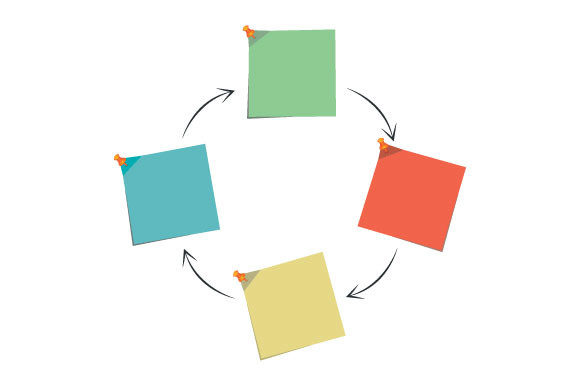
Memo Note Paper Diagram Template Guide
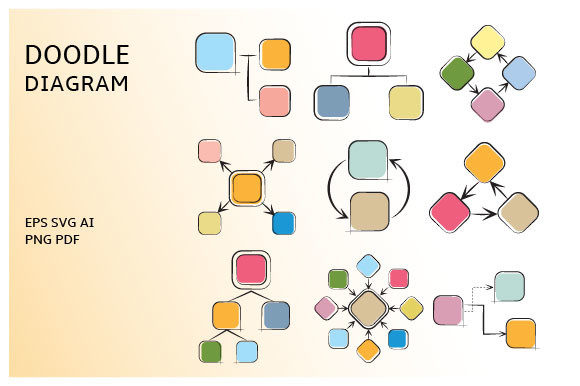
Visual communication often fails when it feels too sterile or overly complex. In an era where digital noise is constant, finding a way to present information that feels personal yet professional is a genuine challenge. The Memo Note Paper Diagram Template bridges this gap by combining the familiar, approachable aesthetic of stationery with the structural clarity of process diagrams. This resource is not merely a collection of graphics; it is a comprehensive system designed to streamline how you visualize workflows, organizational charts, and conceptual ideas. By leveraging 100 distinct vector icons, this template set allows creators to build custom visuals that retain high fidelity across any medium, from mobile screens to large-format prints.
The Strategic Value of Stationery-Style Visuals
Why choose a memo note aesthetic for business or educational diagrams? The answer lies in cognitive psychology and user engagement. Traditional corporate flowcharts can sometimes induce mental fatigue because they signal "bureaucracy" before the viewer even processes the content. A Memo Note Paper Diagram Template subverts this expectation. It utilizes the visual language of organization—sticky notes, paper clips, index cards, and handwritten elements—to create a sense of tactile familiarity. This approach lowers the barrier to entry for complex topics, making standard operating procedures, onboarding guides, or creative briefs feel more accessible and less intimidating.
For professionals aged 20 to 50, this style resonates deeply. It bridges the gap between analog nostalgia and digital efficiency. Whether you are a freelancer pitching a client, a teacher explaining a historical timeline, or a product manager mapping out a user journey, the memo style implies that the information is actionable, current, and human-centric. It transforms static data into a narrative that looks like it was curated specifically for the audience, rather than generated by an impersonal algorithm.
Technical Versatility Across Formats
A major friction point in design work is file compatibility. You might start a project in Adobe Illustrator but need to share assets with a team member who only uses PowerPoint or Canva. This template package addresses that workflow bottleneck by providing every icon as a separate, high-resolution PNG file on a transparent background. This granularity means you do not have to extract or crop assets from a master sheet. You simply drag and drop the exact element you need into your workspace.
The inclusion of AI, EPS, SVG, and PDF files ensures true scalability. Vector formats like SVG and EPS are mathematically defined, meaning they remain crisp whether they are displayed at 50 pixels wide on a website or blown up to cover a billboard. For web designers and app developers, the SVG format is particularly valuable as it allows for CSS manipulation and animation directly in the browser. Meanwhile, the PDF option serves those in print publishing or academic research who require standardized document embedding without losing quality.
Practical Applications for Diverse Professionals
The utility of this diagram template extends far beyond simple decoration. Its real power emerges when applied to specific professional challenges. Consider the following use cases where this asset set drives tangible results:
- Corporate Training and Onboarding: New hires often struggle to digest dense employee handbooks. Replacing text-heavy policy descriptions with memo-style process diagrams improves retention rates. The visual cues help map abstract rules to concrete actions.
- Educational Content Creation: Teachers and tutors can use these icons to create visually distinct study guides. Differentiating between vocabulary terms, historical events, or scientific processes becomes easier when each category has a unique, consistent visual marker.
- Social Media and Blogging: Content creators need to stop the scroll. A carousel post featuring a step-by-step tutorial using memo note graphics performs significantly better than plain text slides. The transparent PNGs allow for easy overlay onto branded backgrounds without awkward white boxes.
- Project Management Visualization: Agile teams and scrum masters can digitize their physical Kanban boards. Using these vectors maintains the collaborative feel of sticky notes while enabling remote teams to collaborate asynchronously in tools like Miro, Figma, or Notion.
- Client Presentations: When proposing a strategy, looking polished matters. These diagrams elevate slide decks from generic templates to bespoke presentations that demonstrate attention to detail and thoughtful communication.
Enhancing Workflow Efficiency and Brand Consistency
Time is the most scarce resource for modern professionals. Creating custom illustrations from scratch for every new presentation or document is rarely feasible. This template acts as a force multiplier for productivity. Because the 100 icons share a unified design language, you can mix and match them freely without worrying about clashing styles. This consistency is crucial for branding. Even if multiple team members create different documents, the shared visual vocabulary ensures that all outputs look like they belong to the same organization.
Fully editable source files further enhance efficiency. If your brand color is a specific shade of teal, you can open the AI or EPS files and globally update the color palette in minutes. This adaptability prevents the "stock asset" look that often undermines professional credibility. You maintain the convenience of pre-made assets while retaining the customization capabilities of original artwork.
Navigating Digital Assets: Best Practices
Since this is a digital instant download with no physical component, managing the files correctly upon receipt is essential for long-term usability. Upon unzipping the package, organize the assets logically. Many users find it helpful to create a dedicated library folder sorted by category (e.g., arrows, office supplies, tech devices, people) rather than keeping them in a single flat list. This initial setup saves countless hours of searching later.
When implementing these diagrams, remember that white space is your friend. The memo note aesthetic relies on a sense of organized clutter; packing too many elements together defeats the purpose. Allow each icon and label room to breathe. Additionally, always verify the resolution requirements of your final output platform. While the vectors are infinite, the PNGs are fixed. If you are designing for high-DPI displays or print, prioritize the vector formats or ensure you are using the highest resolution PNG available to avoid pixelation.
Finally, consider accessibility. While the visuals are engaging, they should support, not replace, clear textual information. Always include alt text when using these PNGs on websites, and ensure that color contrast ratios meet WCAG standards if you modify the default colors. The goal is to make information clearer for everyone, not just those with perfect vision. By treating this Memo Note Paper Diagram Template as a communication tool rather than just a decorative pack, you unlock its full potential to inform, engage, and inspire your audience across every project you undertake.